
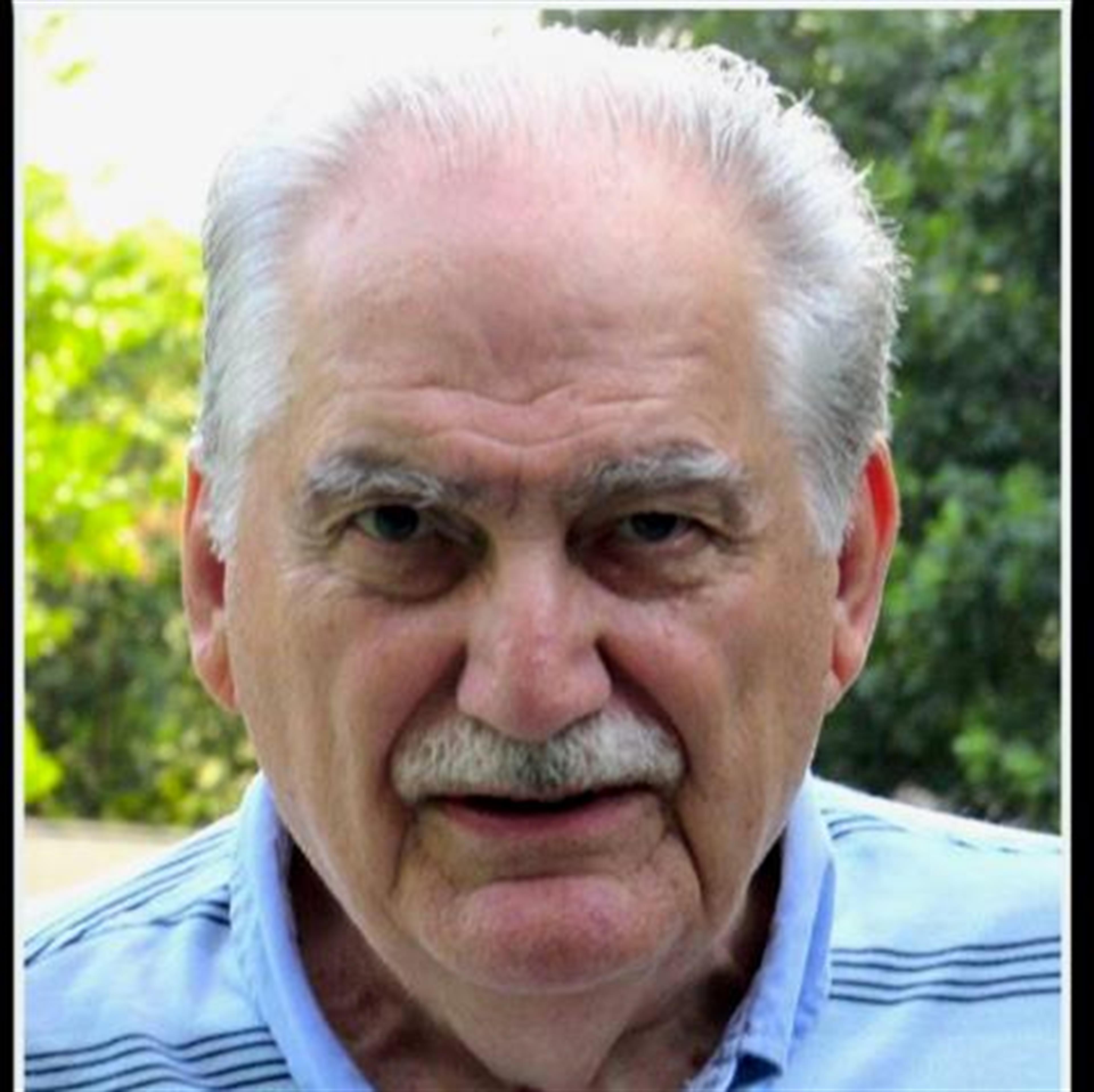
Marc Armand Abelanet's Obituary
Marc Armand Abelanet was born in Courbevoie, France near Paris on February 21, 1943 to Catalina Izquierdo Abelanet (later Catherine Carpenter) and René Antonin Abelanet. He died on March 4, 2025 in Dallas. He was 82.
Both of his parents were in the French underground during World War II, and he always said his earliest memory was of being held in his grandmother’s arms and seeing the exploding lights of bombs in the distance.
Growing up, he was particularly close to, and sometimes spent months with, his maternal grandparents, Raphael and Anastacia Izquierdo, who had come to France to escape the brutal Franco regime in Spain. They lived in several smaller towns in France wherever Raphael could find work, whether as a forest ranger or working in a hellish stamping plant.
Some of Marc’s lifelong humor and wit surely came from this grandfather, who despite enduring much hardship, was known for his playful outlook on life. He was also a natural leader and Marc admired him as much as any man he ever met.
His grandmother had also known great challenges, having to help raise her eight brothers and sisters in Spain when their mother died. She had a capacious heart. He remembered her saying, “Los pobrecitos, los pobrecitos,” whenever she heard of a tragedy somewhere in the world. Marc’s lifelong hatred of excess salt, however, did surely come from the salted cod she prepared every Friday.
Visiting them was a big part of his young life and he knew the pleasure of pulling a fresh carrot out of the ground and tending to chickens and rabbits. Another of his jobs was collecting snails, or escargots, for the family meal.
He and his cousin Alain got into much trouble, usually instigated by daredevil Marc. He would get a spanking from his grandfather first and then invariably Alain would get a spanking too for being a tattletale.
But much of his early life after the war was spent in Nice with his mother after his parents divorced. Once a Roman city, Nice was one of the jewels of the French Riviera on the sparkling Mediterranean. It was a heady place in the post-war years, with a special glamour that attracted wealthy and creative people, White Russians, and many sun-seeking Brits. Painters loved Nice’s crystalline light and among those young Marc met were Pablo Picasso, Marc Chagall and Jean Cocteau.
His first school was in a mansion in Cimiez, a quiet, leafy part of Nice, that was run by a rather dour schoolmistress who had moved there from Paris. It was a boarding school and the children came to Madame La Directrice’s bedroom still in their pajamas and robes to greet her every morning.
Already a doodler, and as boys do, Marc drew a picture of planes with bombs dropping from them that Madame saw one day and looked most displeased. Marc later learned that her husband, who was also a school teacher, had been sitting in bed beside her in Paris years earlier when a bomb fell through the ceiling and struck him, killing him, but sparing her.
When Marc was a little older, his mother worked for the Thomas Cook Travel Agency and led a tour called “Riviera by Night.” Her last stop of the night was a nightclub with a revue of dancing girls and occasionally young Marc was allowed to have a bite to eat and wait for her there backstage amongst the feathers and glitter, being cooed over by the surprisingly maternal showgirls.
His own time in the spotlight came as the lead singer in a church choir. He remembered singing for the funeral of one of the princess Bonapartes. Unfortunately, adolescence and a change in his voice meant a swift, ignominious end to his starring role.
But he began to show the artistic talent that would later result in him being a fine draftsman and lithographer. His youthful work was critiqued by Jean Cocteau, who made some suggestions but thought he showed promise. He met Picasso at his atelier when his mother’s photographer boyfriend invited him along to a shoot, and he also met the often bibulous Chagall at a reception in Nice. Chagall would always be a particular favorite of Marc’s.
When he was a bit older, he began to board at the Don-Bosco School in Nice, enrolled in the math and science program where he was often top of his class. He came to have great respect for the uncompromising pères or father priests who taught him. The school received a commendation from Israel for hiding Jewish boys in the school’s attic during the war. They were never caught, despite several raids on the school by the Gestapo.
Summers in Nice were idyllic for an adventurous and curious young man. Since his mother worked at night, she often slept during the day and he was free to roam the city.
He might begin at the patisserie owned by his godmother, who always had a treat for him.
He might walk along the beach or the Promenade des Anglais, often being invited to eat lunch with friends he encountered there. One special friend was Dieter, son of an American food company executive and his younger German wife. Dieter’s mother was sometimes seen in a full-length mink coat, rather unusual for balmy Nice, and she spent a great deal of time gambling, but was very generous toward Marc, her son’s friend.
One year, he had a job at the elegant belle-époque hotel Le Negresco, and he occasionally rode the elevator up in his slightly ludicrous page boy outfit with the likes of Gregory Peck and his wife or other well-known actors of the day. Once he delivered a telegram to the actress Romy Schneider who was still in her peignoir. When she apologized for not having money to tip him he quietly demurred, “No, no mademoiselle, no tip is necessary.”
There were many other adventures. One day he and a friend brazenly swam up to the yacht of the Greek shipping magnate Stavros Niarchos, which was docked near Nice. The two boys were invited up to see inside the yacht, where a small party were lounging about naked, including Marc’s friend Jean Cocteau. They were shown Napoleon’s gold bathtub and caught a quick whiff of the lives of the super wealthy.
He also was invited with his mother to spend a day on the U.S.S. Forrestal, the super carrier docked in nearby Villefranche-sur-Mer.. He was impressed by the sheer vastness of the ship and the enormous number of people it carried, but he was also awed by his first taste of fried chicken.
Another exciting moment came after meeting Jacques Cousteau when Marc’s school went to nearby Monaco and participated in a program run by the great oceanographer.
Marc and his mother acquired a poodle, the result of an “indiscretion” of a champion poodle and a common interloping one. They called him Billy (bill-ee). Since Marc walked him every morning, he was referred to by some of the Niçois as “Monsieur Billy.” It was always an opening to meeting strangers on the street. It seems that his mother was rather fond of Billy, because in later years, when she was upset with Marc, she called him “Kim (husband), Raphael (brother), Billy (dog), Marc!” He understood his place in the social order.
One Christmas Day, while walking Billy, he encountered a contingent of black American sailors waiting in line to be “entertained” by the local sidewalk hostesses, when one of them began to sing “Silent Night” in a very Paul Robeson sort of voice, and spontaneously, he was joined by some of the others a cappella. Marc, who loved opera (and sometimes cried during it) all his life, said it was one of the most moving performances he ever heard.
Another part of his education came the year he and his mother lived in England—he in a boarding house with some kindly Brits who had a son his own age. Attending the Kingsley School in Chelsea, he was caned on the hand by the headmaster for (who knew?) wandering over to the girl’s side of the playground. Kingsley students wore uniforms, including beanies, which Marc found ridiculous. Perhaps even more ridiculous was the musical instrument he was given to play— the piccolo—the smallest instrument for the tallest boy in the class.
As in Nice, Marc had days he could wander around London, but one day he had to seek the help of a bobby when the fog was so thick he could not see anything in front of him. Another memory was of attending the enormous and rowdy international Boy Scout Jamboree held in Britain that year.
In 1959, Marc’s mother remarried an American, Kimzey Earl Carpenter, Jr. and they moved to Dallas. As young people do, he adjusted pretty quickly to his new country, but there was a learning curve.
The family’s first home was in Roswell Court, which is near a number of restaurants and bars. One day, the 6 foot 5, but still a minor Marc, walked into a bar and ordered a martini. It dawned on the bartender after a short while to ask him his age and when Marc told him he exploded, “ Damn son! Are you trying to get me shut down!” Another part of his early Texas education was learning to play 42, dominoes, with firemen from the local firehouse that he had met walking by.
He used to tell the story about being an extra in the movie “State Fair,” filmed in Dallas at Fair Park, his one less-than-stellar venture into cinema. At one point one of the stars was on his umpteenth take because he couldn’t remember his lines and seemed to imply that the extras were at fault. The tallest extra—Marc—was yelled at by José Ferrer, the director (“Get out! Get out!”) and summarily escorted from the set by one of the guards, who told Marc not to take it personally. Actually Marc considered it quite a distinction to be yelled at by someone of the caliber of José Ferrer. (Years later, Marc’s stepson, Michael Borth, looked in vain for a copy of this movie for Marc, but he had to settle for Kurosawa. )
A less agreeable distinction came when he went to an amusement park with a black co-worker and his friend was singled out for exclusion when he tried to ride the ferris wheel with Marc. Marc then declined, mystified about the kind of prejudice still ingrained in Dallas culture.
He and his stepfather Kim grew close and he often tried to remind him that arguing in an overly rational manner with his beautiful but volatile Spanish mother was not the wisest approach. Spaghetti was known to hit the wall of the kitchen during some of those disputes. Marc’s ongoing argument with his mother was about, surprisingly, his birthdate, to which she claimed, “I should know—I was there!”
Marc attended the University of Dallas when he was 16. He had some excellent professors, including the classicist Louise Cowan, who to his great surprise recognized him in a restaurant 50 years later.
Marc married Carolyn Ann Matzner in 1964 and the only child happily became part of a much larger family of Carolyn’s four brothers and parents. He and Carolyn lived in Irving and had three children: Jean-Paul (J.P.), Marie-Claire (M.C.), and Philippe (Phil). It was a lively household and raising his three very bright children with Carolyn was a very happy time in his life.
He loved almost everything about being a parent, even working the concession stand at football games and housing pet rats and rabbits, but sometimes he might have seemed too involved, as when Marie-Claire asked him to please not go to the door when her dates arrived at the house. His tallness did make him rather intimidating.
The family took two trips back to France to visit Marc’s father and beloved grandparents and Marc was proud to show off his wife and kids to other relatives as well.
In his work life, Marc did several different jobs, including graphic artist at LTV and REI (not the sporting goods store), being self-employed, and working for an insurance company where the primitive, but at the time state-of-the-art magnetic core computer filled an entire room. But he was primarily a mechanical engineer for several large companies. He was offered a job with Ross Perot but it came with the stipulation that he shave his mustache, and that was a no-go for Marc. His longest employment was at Plastronics in Irving, where he made several dear friends. While at Plastronics, a number of his designs were patented.
After his divorce, Marc often ate dinner on Monday nights with his mother, who was an extraordinary cook. After dinner, Catherine, a language instructor at Southern Methodist University, held a French conversation class and there he met Nancy Leake Borth, also divorced. They were friends first and did not start dating for several years and Nancy used to joke that since they took so long to get together that Marc finally begged her to marry him to which he agreed, “Pretty much.”
They married in 1998, outdoors on a perfect April spring day at their house surrounded by family and friends and banks of azaleas and flowers. It was such a happy day, even more so because his beautiful daughter-in-law, Kathy Abelanet, would soon give birth to his first long-awaited grandchild.
The family bedlam was a source of great fun at holidays with kids and grandkids invariably crowding into the kitchen until it sounded like honking the horn at the turkey farm and Marc finally ordered everyone out who wasn’t preparing food.
Nancy and Marc went to France on several occasions, always stopping in Paris for a week, and then going somewhere else for another week: Menton, Barcelona, the Pyrenees. On one trip a pal came along and introduced them to the hitherto unknown wisdom of choosing restaurants by how attractive the waiters were, and on another trip they went with kids and grandkids to Nice and St.-Jean-Cap-Ferrat and let them see where their old man had grown up.
Grandchildren brought much happiness: first Camille and then Nicolas Abelanet and then, when Marie-Claire married Ed Price with his two boys, Duncan and Clark. And last October, he had the pleasure of meeting his great-granddaughter, Annie Price. She flew into town (with her parents and grandparents) to meet him in person. Quite a feat at only a year old! Marc loved seeing the world through the eyes of a new generation and watching them spread their wings. He never tired of watching his grandchildren perform on stage. One of Nancy’ favorite photos is of Marc with young Camille and Nicolas literally draped around him while they all watch something intently on television.
Another great passion for Marc was the arts. He loved movies, the theater— especially Shakespeare—and the opera. The symphony was made even more exciting for him when he developed a close friendship with Emanuel Borok, who was concertmaster of the Dallas Symphony, and Arkady Fomin, also one of its finest violinists. After attending symphony performances, he sent his imaginative but cogent “reviews” to both Manny and Arkady and they were read with pleasure.
Marc always planned to volunteer at the zoo after he retired and he did just that. It was one of the happiest times in his life, combining his love of animals, his love of children and his uncanny eye for photography. There is something essential that unites people who have a love of animals, and he enjoyed meeting people from all over the world. More unexpectedly for someone later in life, he made loving friendships, particularly with “the sister wives” Barbara, Julie and Jill, three vibrant women he worked with, and a handful of others at the zoo.
Children instinctively felt at home with the big guy and he naturally came home with several colds during the year. One little boy at zoo camp insisted that his mom wouldn’t mind and he really, really should come home with him to see his treehouse.
Every week he put together a narrative with the photos he had taken of the animals and sent it out in email form. Soon it was requested by a large number of people, who found it captivating.
On one rare occasion Marc was accompanied by a keeper inside, behind the gorilla exhibit, and walking by, saw B’wenzi, his favorite male gorilla, in his enclosure. B’wenzi seemed to recognize the man who had taken so many photographs of him over the years and extended his arm through the bars and he and Marc, very briefly, touched.
Marc got a standing ovation at one of the volunteer appreciation dinners and in 2020 he received the Volunteer Hall of Fame award.
But he didn’t do it for anyone’s approval. Putting on his uniform and getting to the zoo, walking through the park, so eerily quiet in the early morning before people arrived, watching in his hyper-observant way the lumbering elephants begin to come into the exhibit or the playful gorillas begin to find their spots on the grass, was, he knew, a rare privilege. He certainly devoted much time and love to the Dallas Zoo, but what astounding luck that it was all he hoped it would be and so much more.
His last years were not as lucky. Marc fell and broke his femur in 2019 and seemed to recover well, and there were many happy moments to come. But his very last years were ones in which he was not quite himself most of the time—with some magnificent exceptions—and his last months were very difficult ones for him and his family. Putting together this remembrance has allowed those of us who loved him to spend time with the husband and the father and the friend he was most of his life.
We will miss him so much.
He is survived by his wife, Nancy Leake Abelanet; his son, Jean-Paul and his wife Kathy; his daughter, Marie-Claire Abelanet and her husband, Edward Price; his son, Phil; his stepson, George Michael Borth; his granddaughter, Camille Abelanet and her fiancé, Kevin Wang; his grandson, Nicolas Abelanet; his grandson, Clark Price; his grandson, Duncan Price and his wife Michelle; a great-granddaughter, Annie Price; and a stepsister, Frances Martin and her family.
A Celebration of Life will be held for family and friends at the Dallas Zoo. Donations may be made in his name to the Dallas Zoo or a charity of the donor’s choice.
What’s your fondest memory of Marc?
What’s a lesson you learned from Marc?
Share a story where Marc's kindness touched your heart.
Describe a day with Marc you’ll never forget.
How did Marc make you smile?